A run of 100 event flyers needed by Friday has very different print needs from 20,000 letterbox pieces planned for next month. That is where digital versus offset printing becomes a practical business decision, not just a production detail. The best choice affects your turnaround, unit cost, colour consistency and how confidently your brand is represented in customers’ hands.
For most businesses, the answer is not that one method is always better. It depends on what you are printing, how many you need, whether every piece is the same, and how soon it needs to arrive.
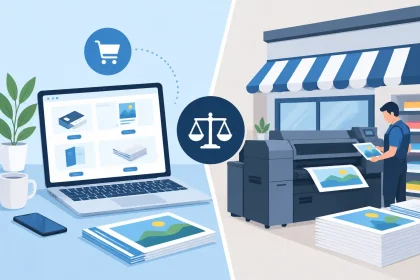
Digital versus offset printing: the practical difference
Digital printing produces artwork directly from a digital file. There are no printing plates to create, which makes the process efficient for short runs, quick reprints and jobs that need changing information from one piece to the next. Think business cards for a growing team, a last-minute sale flyer, or event materials with a confirmed date and venue.
Offset printing works differently. Your artwork is transferred to metal plates, then from the plates to a rubber blanket and onto the paper or card. There is more preparation before the presses run, but once set up, offset is highly efficient for larger quantities. It has long been a strong choice for bulk campaigns, stationery programs and high-volume promotional material.
Both can produce professional, sharp print. The more useful question is which process gives you the right result for the job without adding avoidable cost or delay.
When digital printing makes better business sense
Digital printing is often the sensible option when speed and flexibility matter most. Because there is no plate setup, a print run can move from approved PDF artwork into production quickly. That is helpful when stock has run low, details have changed, or a trade show is closer than expected.
It is also well suited to smaller quantities. Ordering only what you need helps control cash flow and reduces the chance of storing boxes of outdated collateral. A café promoting a seasonal menu, for example, may need a modest run of coasters or flyers now, then different artwork a few weeks later. Digital allows that change without restarting a large offset order.
Personalisation is another clear advantage. Digital printing can vary names, offers, locations or booking codes across a single run. A real estate agent can print cards tailored to different suburbs. A venue can create invitations with individual guest details. A professional services firm can prepare branded materials for several advisers without treating each variation as a separate major job.
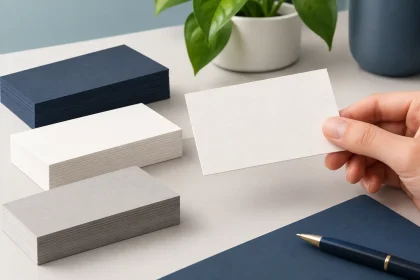
Digital is commonly a good fit for business cards, flyers, small batches of letterheads, short-run promotional cards and urgent event collateral. The final choice still depends on stock, finish and artwork, but short runs and changing content generally point towards digital.
What to expect from digital colour
Modern digital presses deliver strong colour, crisp text and clean photographic detail. For most day-to-day branded print, the finished result is polished and consistent. If your artwork includes a highly specific corporate colour or a large solid colour area, it is worth discussing the job before placing the order.
Colours can appear slightly different between a screen and print because screens use light while printed materials use ink or toner on physical stock. A PDF prepared correctly in CMYK, with appropriate bleed and resolution, gives the production team the best starting point. If something looks questionable in your file, resolving it before print is far easier than discovering it after delivery.
Where offset printing earns its place
Offset printing generally becomes more cost-effective as quantities increase. The initial setup takes time and adds cost, but that cost is spread across the full run. For a larger campaign, the cost per flyer, brochure or letterhead can become very competitive.
It is a practical option for businesses planning ahead. A franchise group ordering a substantial volume of branded stationery, a retail chain preparing a national catalogue drop, or an event operator distributing thousands of identical promotional pieces may gain more value from offset production than from several smaller digital runs.
Offset also offers excellent colour control, particularly where brand standards are strict. Pantone spot colours can be used for specific hues, helping reproduce colours that can be difficult to achieve through standard four-colour process printing. This matters when a signature colour is central to brand recognition, such as a distinctive red, green or metallic tone.
The process performs especially well with larger solid areas of colour and long runs where consistent reproduction from the first sheet to the last is essential. Premium finishes and a broad range of paper stocks can also be part of an offset project, depending on the product and specification.
The trade-off is planning time
Offset printing is not usually the answer for a tiny urgent job. Plates need to be prepared, the press needs to be set up and the job must be scheduled into production. Changes after approval can mean additional setup and cost.
That does not make offset slow or inconvenient. It means it rewards good planning. If you know you will need 10,000 identical flyers for a campaign in six weeks, ordering early can deliver strong value and dependable quality. If you need 250 revised flyers tomorrow, digital will usually be the more practical route.
Compare cost by total value, not only unit price
It is easy to focus on the price per piece, especially for larger orders. But the lowest unit price is not always the lowest overall cost to your business. Ordering far more than you can use ties up budget, takes up storage space and creates waste when contact details, prices or offers change.
A short digital run may carry a higher per-unit cost than a large offset run, yet still be better value if it lets you test an offer, update a campaign or avoid a costly reprint. On the other hand, repeatedly ordering small batches of identical materials can cost more over time than one well-planned offset order.
Before choosing, consider the quantity you can realistically distribute, the lifespan of the information, and whether your artwork is likely to change. A printed menu with frequently adjusted pricing has different requirements from evergreen business cards or company letterheads.
Quality starts with the artwork file
Neither print method can rescue low-resolution images, incorrect dimensions or text placed too close to the trim edge. Good artwork gives both digital and offset production the chance to do their best work.
For most commercial jobs, supply a press-ready PDF at the required finished size, with bleed included where colour or images run to the edge. Use high-resolution images and convert colours to CMYK where requested. Check phone numbers, web addresses, pricing and dates carefully before approving the file. A simple proofread can prevent a full run of material becoming unusable.
If you are unsure whether your file is ready, ask before ordering. Direct feedback on artwork issues can save time and keep a deadline on track, particularly for first-time print buyers or time-sensitive event jobs.
A simple way to choose your print method
Digital printing is usually the stronger option for shorter runs, quick turnarounds, personalised content and artwork that may change. Offset printing is often the better fit for larger volumes, repeat campaigns, strict colour matching and work planned far enough ahead to allow for setup.
There are exceptions. A small luxury piece may call for a particular stock or finish that influences the production method. A large order with multiple versions may favour digital because it avoids separate plates and allows versioning. The product, quantity and deadline should be considered together rather than in isolation.
For Australian businesses, the goal is straightforward: print enough to make an impact, choose a finish that reflects your brand, and avoid paying for complexity your job does not need. Whether you need sharp business cards for a meeting, coasters for a busy venue or flyers for a local promotion, a quick conversation about quantity, artwork and timing can turn a printing decision into a better result.