A business card passed across a counter, a quote sent in a branded envelope and a letterhead attached to an important proposal all say something before the words are read. This corporate stationery guide explains how Australian businesses can choose printed materials that look professional, work hard in daily operations and keep their brand recognisable at every customer touchpoint.
Corporate stationery is not just for large companies with formal offices. A local tradie, accounting practice, café group, real estate agency or event organiser can all benefit from print that makes their business feel established, organised and ready to help. The right mix depends on how you meet customers, send documents and promote your services.
What corporate stationery does for your brand
Most businesses have a logo, colours and contact details. Corporate stationery turns those assets into practical tools people can hold onto, receive in the mail or take away after a meeting. It creates repetition, and repetition is what makes a brand easier to remember.
A clean business card gives a sales conversation a useful next step. A letterhead makes a proposal, invoice or formal notice feel considered rather than rushed. Branded envelopes add credibility before correspondence is opened. These details may seem small on their own, but together they show customers that you pay attention to the way your business presents itself.
There is also a practical commercial benefit. Printed stationery keeps your business details close at hand when a customer needs to call, email, book or refer you to someone else. Digital communication is essential, but physical print still has a place where trust, face-to-face service and local visibility matter.
Corporate stationery guide: start with everyday use
The most useful stationery order starts with the work your team already does. Rather than ordering every possible item, look at the moments where customers, suppliers and prospects see your name. This keeps spending focused and helps you order quantities that make sense.
Business cards for personal introductions
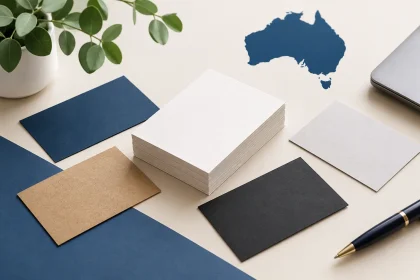
Business cards remain one of the most flexible pieces of branded print. They are useful at meetings, site visits, networking events, inspections, trade counters and hospitality venues. They are also easy to include with completed jobs, product orders or welcome packs.
Keep the information simple. Your logo, staff member’s name, role, mobile number, email address and website are usually enough. If the card needs to drive a specific action, such as booking an appointment or viewing a menu, a QR code can help, provided it leads somewhere useful and is tested before print.
Premium stock can make a noticeable difference here. A card that feels substantial is more likely to be kept, while sharp print helps small type and fine logo details remain clear. If your team has frequent staff changes, smaller quantities or editable templates may be the more sensible choice than ordering thousands of cards at once.
Letterheads for formal communication
Letterheads are valuable wherever your business sends quotes, agreements, reports, certificates or official correspondence. Professional services firms often use them regularly, but they can be just as helpful for builders, schools, strata managers and community organisations.
A letterhead does not need to be crowded. Leave clear space for the document content and place branding around the header or footer. Include your ABN and contact details if appropriate, but avoid turning every page into an advertisement. The document should be easy to read first and branded second.
Consider how you will use it. Pre-printed letterheads suit businesses that post or hand out physical documents. A matching digital template may be better for documents sent by email. Using both gives your brand a consistent appearance regardless of format.
Envelopes that carry the presentation through
A branded envelope is a practical finishing touch for letters, vouchers, contracts and direct mail. It reinforces who the sender is, helps correspondence look legitimate and avoids the anonymous appearance of a plain envelope.
Choose the envelope size around the documents you send most often. DL envelopes work well for standard folded A4 letters, while larger formats are useful for brochures, folders or paperwork that should not be folded. If you mail items often, make sure the layout leaves enough clean space for addressing and postage.
Promotional pieces that belong with stationery
Some items sit just outside traditional corporate stationery but are often part of the same order. Flyers are useful for promoting a new service, event or limited-time offer. Fridge magnets suit businesses that customers need to contact later, such as trades, medical practices, takeaway venues and local service providers. Drink coasters can give bars, cafés and event spaces a useful branding surface right where customers spend time.
The key is relevance. A magnet is not necessary for every business, and a flyer is not a replacement for a strong business card. Choose products that match the way customers engage with you.
Build a consistent design system before printing
Consistency is what turns separate printed pieces into a recognisable brand set. Your cards, letterheads, envelopes and promotional material do not need identical layouts, but they should clearly belong together.
Use the same approved logo files, colours, typefaces and tone of voice across each item. Decide whether your brand feels clean and minimal, bold and energetic, premium and restrained, or warm and local. That direction should guide design decisions such as white space, imagery and paper choice.
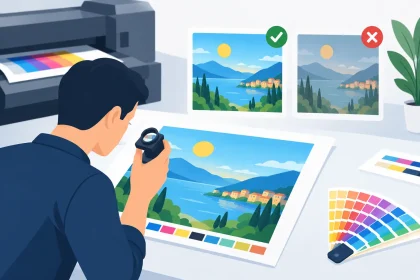
Be careful with colours. What looks bright on a screen can print differently, especially when files are built in RGB rather than CMYK. If an exact brand colour matters, provide the correct colour values and ask for advice before placing a large run. This is particularly worthwhile for franchises, venues and businesses with established brand guidelines.
Small type is another common issue. Contact details must be easy to read, not squeezed into a corner to fit more copy. A good rule is to prioritise the information a customer actually needs, then remove anything that does not earn its place.
Choose stock and finishes for the job
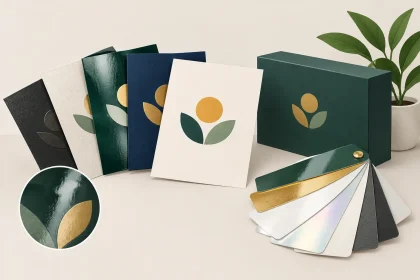
Paper and finishing choices affect both appearance and usability. Heavier stock usually feels more premium for business cards, while letterheads need a stock that feeds cleanly through office printers if you intend to add variable information later.
Gloss finishes can make photographs and strong colours stand out, which can work well for promotional flyers. Matte or uncoated stocks often suit letterheads and cards where customers may need to write notes. For hospitality materials, absorbency and durability may matter more than a decorative finish.
There is no single best option. A high-end property agency may choose a thicker, refined card to support a premium service position. A busy event operator might favour a cost-effective format that can be distributed in volume. The right choice is the one that supports the purpose without stretching the budget for features customers will not notice.
Prepare artwork that prints cleanly
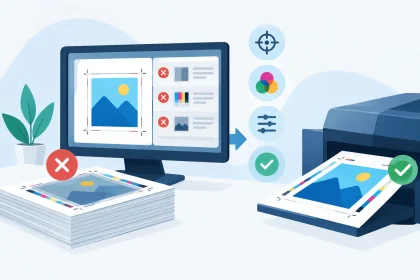
Press-ready PDF artwork helps keep turnaround moving. Before uploading files, check that the document is set to the correct finished size, images are high resolution and important text stays clear of trim edges. Include bleed where required so colour and images run neatly to the edge after trimming.
Review every detail at normal viewing size. Check phone numbers, email addresses, ABNs, staff names and QR codes. A typo on a screen is easy to fix; a typo across 1,000 business cards is an unnecessary cost.
If you are not confident with artwork setup, ask for help before production begins. It is better to resolve a file issue early than rush through an order and compromise the finished result. iPrint Media can assist when artwork needs attention, whether you have a near-finished design or need guidance on the right print setup.
Order quantities around real demand
Ordering in bulk can reduce the unit cost, but only if the materials will be used. Businesses with stable branding and regular customer contact may benefit from larger card, envelope or flyer runs. Businesses testing a new offer, updating contact details or changing staff frequently may be better off starting smaller.
Think about storage as well. Keep stock somewhere dry, flat and easy for staff to access. There is little value in ordering a great-looking run of collateral if it sits forgotten in a cupboard while the team hands out old materials.
For deadline-driven jobs, such as a conference, venue opening or campaign launch, allow time for artwork checks, production and courier delivery. Fast turnaround is useful, but planning ahead gives you more room to make good decisions rather than simply accepting whatever is available.
The best corporate stationery feels effortless to the customer because it is useful, clear and consistently on brand. Start with the pieces your business uses every week, make each one easy to read and let quality print do the quiet work of making every interaction feel more professional.