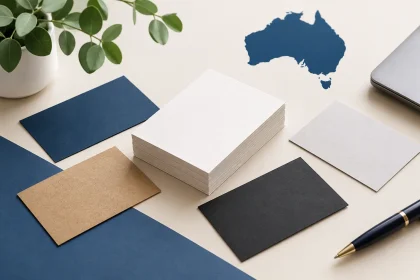
A business card can be beautifully designed, but if it feels light, flimsy or overly glossy in a customer’s hand, the impression can fall short. That is why people often ask, what does 420gsm feel like? In simple terms, it feels thick, firm and premium – closer to a quality card than a standard sheet of paper.
For businesses that want their printed materials to look considered and feel worth keeping, 420gsm stock creates immediate physical presence. It has enough weight to feel substantial when handed across a counter, tucked into a presentation folder or picked up from an event table. It is not just about thickness, though. The finish, coating and purpose of the printed piece all affect the final feel.
What does 420gsm feel like?
A 420gsm card stock usually feels stiff, solid and noticeably heavier than everyday business printing. You can bend it with deliberate pressure, but it will not flex easily in normal handling. When you hold a 420gsm business card between your fingers, it has a confident weight without feeling bulky or awkward to carry.
Compared with standard office paper, which is commonly around 80gsm, 420gsm is in another category altogether. It feels more like a premium postcard, high-end product tag or sturdy invitation. The edges feel defined, the card sits flat, and it is less likely to crease in a wallet, handbag or stack of marketing materials.
The word “premium” gets used often in print, but this is one area where customers can genuinely notice the difference. A heavier stock signals care before a person has even read the message, scanned the QR code or looked closely at the design.
GSM explained without the print jargon
GSM means grams per square metre. It measures the weight of a paper or card stock over one square metre. As a general rule, the higher the GSM, the heavier and often thicker the material will be.
That said, GSM is not an exact thickness measurement. Two stocks with the same 420gsm weight can feel slightly different depending on how they are made. One may be smoother and denser, while another may have more texture or a softer surface. Coated stocks can feel sleek and polished, whereas uncoated stocks often feel more natural and tactile.
For practical comparison, 150gsm is often used for flyers and premium brochures. Around 250gsm to 350gsm is common for many business cards and postcards. At 420gsm, you are moving into a distinctly heavier card that is designed to make an impact.
How 420gsm compares with lighter card stocks
If you are choosing stock online, it helps to think about how each weight behaves in the real world rather than focusing only on the number.
A 250gsm card is professional and versatile, but it has some flex. It works well for postcards, appointment cards, menus and promotional handouts where you need a quality feel without extra weight. A 350gsm card is firmer and is a popular choice for business cards because it balances durability, price and ease of carrying.
At 420gsm, the difference is immediately noticeable. The card feels denser in a stack and more substantial when placed on a desk. It is less likely to curl or bend at the corners, which makes it particularly suitable for materials that will be handled repeatedly.
The trade-off is that heavier card is not always the right choice. If you are printing a large mail-out, a folded piece or something that needs to fit into a standard envelope, stock weight can affect postage, folding and overall cost. For a short-run premium item, however, 420gsm can be a smart way to make the piece feel more valuable.
Where 420gsm stock works best
420gsm is ideal when the printed item is meant to stay with the customer. Think of it as a material choice that supports a strong first impression and longer shelf life.
Premium business cards
A business card is often passed from hand to hand in seconds. Heavier stock gives it a level of authority that lighter cards cannot always match. It feels deliberate, holds its shape well and helps your details stand out in a pile of standard cards.
This can work especially well for professional services, property, construction, hospitality, beauty, automotive and creative businesses. If your work depends on trust, quality or personal connection, a substantial business card reinforces that message.
Loyalty, membership and appointment cards
Cards that customers need to keep should be able to handle life in a wallet or purse. A 420gsm card has the strength for repeated handling and can make a loyalty or membership card feel more official. It is also a good choice for appointment cards that need to remain readable after weeks of being carried around.
Invitations, gift vouchers and event pieces
For weddings, corporate functions, venue launches and ticketed events, weight helps create anticipation. A thick invitation feels more considered before the recipient has opened the envelope. Gift vouchers benefit too, particularly when they represent a higher-value purchase or a special experience.
Table cards and premium promotional pieces
Restaurants, bars, retailers and event operators can use heavier stock for table talkers, VIP passes, promotional cards or small-format displays. The card is less likely to flop over or look tired after a busy service period. It also gives colourful images and clean typography a better physical foundation.
The finish changes the feel
The same 420gsm weight can feel very different depending on its surface finish. This is where stock selection should match the look of your brand and the way people will use the piece.
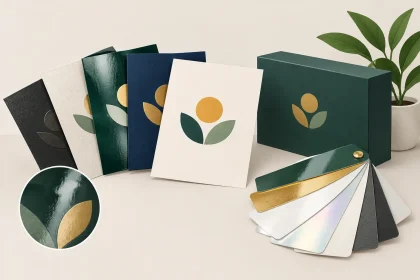
A matt finish feels understated, smooth and contemporary. It suits businesses that want a refined look, and it is often easier to write on than glossy stock. Matt finishes can also reduce glare, which helps with text-heavy designs and darker colour palettes.
A gloss finish feels smoother and more vibrant. It can make photographs, bright colours and product imagery pop, which is useful for hospitality promotions, retail offers and visually led marketing. The surface may show fingerprints more readily, so it is worth considering how frequently the item will be handled.
Uncoated card has a more natural, paper-like feel. It can suit artisan brands, professional stationery and designs where writing space matters. Textured or specialty stocks can add even more character, but they may not reproduce fine detail and solid colour in exactly the same way as a smooth coated board.
Does thicker always mean better?
Not necessarily. The right stock is the one that supports the job, budget and intended use. A premium 420gsm card can be an excellent choice for a business card that opens doors, but it may be unnecessary for a large-volume flyer campaign where reach matters more than weight.
Consider what happens after printing. Will the item be mailed? Folded? Written on? Left outdoors? Handed out at a trade show? These details matter. A stock that feels perfect for a boutique voucher may be too heavy for a folded menu or too costly for a letterbox drop.
Design also plays a part. Minimal layouts, deep colours, fine logos and plenty of white space often benefit from heavyweight card because the material lets the design breathe. If your artwork includes very small text, detailed lines or large dark areas, checking the file before print helps ensure the finished result looks as sharp as it feels.
Getting the best result from 420gsm printing
Use high-resolution images and supply your artwork as a press-ready PDF where possible. Keep important text and logos away from the trim edge, and allow for bleed if colour or imagery runs to the edge of the card. For double-sided pieces, make sure both sides are correctly oriented before upload.
If you are unsure whether 420gsm suits your project, it is worth discussing the intended use with a print professional before ordering. A quick conversation can help you balance stock weight, finish, quantity and turnaround without paying for a specification you do not need.
At iPrint Media, the goal is straightforward: choose a stock that represents your business well, prints cleanly and arrives ready to put to work. If you want a business card, voucher or event piece that feels solid from the first touch, 420gsm is a strong option – not because heavier is always better, but because the right physical finish can make your brand feel more memorable.