A stack of outdated flyers in the storeroom is not just wasted budget – it is also wasted material, ink and freight. For Australian businesses, sustainable printing trends are becoming less about making broad environmental claims and more about ordering smarter: choosing print that will be used, kept and remembered.
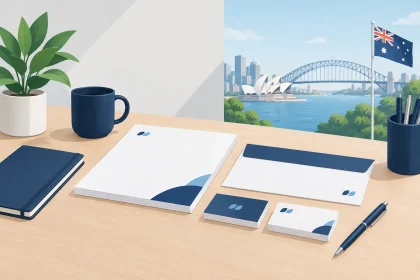
That matters whether you are preparing business cards for a sales team, coasters for a busy venue or pull-up banners for a one-off event. The most sustainable job is rarely the one with the lowest price per unit. It is the one that suits the campaign, arrives when needed and does its job without leaving you with cartons of surplus stock.
Sustainable Printing Trends That Make Business Sense
Print fewer items, with a clearer purpose
The strongest shift in commercial print is towards more intentional quantities. Businesses are moving away from ordering a year’s worth of promotional material simply because bulk pricing looks attractive. Instead, they are ordering in shorter runs that match a campaign, event date, seasonal menu or changing offer.
Digital print technology makes this approach more practical. It can support smaller quantities without the same setup requirements associated with traditional long-run printing. This gives local operators room to test a message, update pricing or refresh an offer before committing to a larger order.
There is a trade-off. Higher quantities can still deliver a better unit price for evergreen items such as letterheads, standard envelopes and core business cards. The sensible question is not “Should we always print less?” It is “How much will we genuinely use before the details become old?” Contact information, staff names, QR codes, dates and pricing can all make a large run obsolete quickly.
Recycled and responsibly sourced paper are becoming standard choices
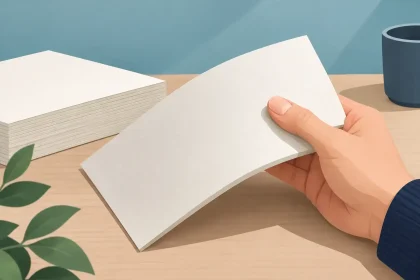
Paper remains central to sustainable print decisions, and customers are increasingly asking where it comes from and what happens after use. Recycled stocks and papers from responsibly managed sources can reduce reliance on virgin fibre while still giving brochures, flyers and stationery a professional finish.
The right stock depends on the product. A premium business card needs to feel substantial in the hand. A hospitality flyer may need bright colour and crisp images. A letterhead must work cleanly through office printers and present well in formal correspondence. Recycled content is one consideration, but it should not come at the cost of legibility, durability or suitability for the job.
For many businesses, uncoated paper is an appealing option for stationery and information-heavy pieces. It has a natural feel, is easy to write on and can support a more understated brand look. Coated stock can still be the better choice for vibrant promotional imagery, product photography or designs requiring strong colour contrast. Sustainable choices work best when material performance is part of the decision, not an afterthought.
Designs are becoming easier to recycle
A printed piece is easier to process after use when its materials are straightforward. This is driving interest in simpler construction, including fewer unnecessary add-ons and less reliance on mixed materials where they do not add real value.
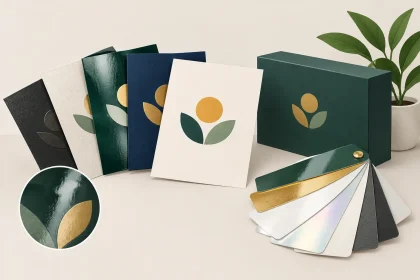
Highly laminated pieces, metallic effects and complex embellishments can look impressive, but they should earn their place. If a finish helps a premium service business make a lasting first impression, it may be worth considering. If it is added only because it is available, a clean, well-designed card on quality stock may deliver more value with less material complexity.
This does not mean sustainable design has to look plain. Strong typography, considered white space, confident colour and a clear call to action often make a bigger impact than extra finishing. A simple flyer that people can read in seconds is more likely to be taken home, acted on and recycled appropriately afterwards.
Variable details reduce outdated stock
Businesses are also reducing waste by separating long-life brand elements from changeable information. Rather than printing thousands of flyers with a fixed offer, consider a design that can be refreshed between promotions. Rather than ordering business cards for every possible future employee, order for the team you have now and top up as roles change.
This is particularly useful for event operators, venues and retail businesses. Dates, sponsors, menu items and promotional prices can change fast. Short, targeted runs keep your material current and help prevent the awkward task of crossing out old information or sending good print to the rubbish.
Before uploading artwork, check the practical details that most often change: phone numbers, web addresses, opening hours, social handles, pricing, dates and QR destinations. A quick proofing check can prevent an entire batch from becoming unusable.
Better Print Planning Cuts Waste Before Production
Sustainability starts well before paper reaches the press. Artwork that is correctly sized, proofread and supplied as a press-ready PDF helps avoid reprints, delays and material loss. It also makes the ordering process faster.
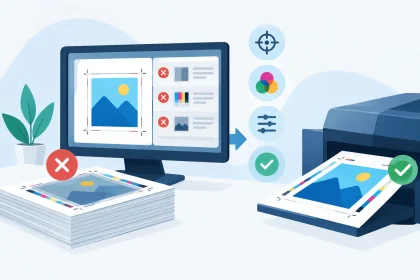
Set up your file to the final product size, include the required bleed and keep important text safely away from trim edges. Use high-resolution images and ensure colours are prepared for print rather than relying on how they appear on a mobile or office screen. These details protect the quality of the finished job and reduce the chance of avoidable corrections.
If you are unsure, ask for help before production begins. A print team can flag common issues such as low-resolution images, missing bleed, incorrect page sizes or text that sits too close to the edge. Fixing artwork early is far more efficient than discovering a problem after delivery.
Good planning also means selecting the right format. A pull-up banner can be reused across multiple trade shows and presentations, making it a practical choice for a message that will stay relevant. A fridge magnet can remain visible for months or years when it offers useful information such as booking details, emergency contacts or a service reminder. Drink coasters can work hard in a venue when the design remains relevant across a long service period.
Durable Print Can Be a More Sustainable Choice
There is a tendency to treat sustainability as a question of using less material. Sometimes that is right. Other times, a more durable printed product prevents repeat orders and delivers better value over its working life.
For example, a thin flyer for a short weekend promotion does not need the same stock as a presentation card used repeatedly by a consultant. A banner for regular events needs a finish that travels well and remains presentable. The goal is to match durability to use, rather than under-specifying a product and replacing it sooner than expected.
The same thinking applies to brand design. Avoid printing materials that exist only to fill a counter or hand out at random. Give each piece one clear job: book an appointment, promote an event, explain a service, share a menu or make follow-up easy. When a customer sees the value in keeping it, your print has a longer and more useful life.
Local Relevance Matters in Australia
Australian businesses often need print delivered across long distances, from metropolitan offices to regional venues and event sites. Consolidating orders where possible can reduce separate deliveries and makes stock management easier. If you know several items will be needed for the same campaign, ordering them together can also help ensure colours, messaging and branding are consistent.
At the same time, do not over-order just to combine freight. A box of outdated stock is not a saving. Balance delivery efficiency with realistic demand, storage space and how quickly your information is likely to change.
For organisations running multiple locations, a simple approval process helps. Keep master artwork current, nominate who can approve changes and make sure each site orders only what it needs. This reduces duplicate orders and keeps the brand looking consistent from Brisbane to regional Queensland and beyond.
Make the Next Print Run Count
The practical direction behind sustainable printing trends is clear: choose materials with care, avoid unnecessary surplus, prepare artwork properly and create pieces people will actually use. Better print planning can lower waste without asking your business to settle for poor presentation or unreliable turnaround.
When you are ready to order, start with the campaign goal and the realistic quantity, then choose stock and finishing to suit. If an artwork file needs a second set of eyes, getting support before it goes to print can save time, budget and a whole lot of unwanted boxes in the storeroom.