A business card handed over after a meeting, a flyer picked up at the counter or a banner standing outside a venue all say something about your business before you get the chance to speak. Online printing makes it easier to keep those everyday brand moments professional, without spending hours chasing quotes, visiting print shops or managing complicated ordering.
For Australian businesses, the real value is not simply being able to buy print from a website. It is being able to order the right product, check the artwork, meet a deadline and receive a result that looks like your brand should look. That takes a little planning, but it does not need to be difficult.
What online printing should make easier
Good online printing should remove friction from a job that is often time-sensitive. Perhaps your sales team is attending an expo next week, your café is launching a new drinks menu, or you have run low on letterheads before an important proposal goes out. You need clear choices, predictable pricing and a production process that does not create more work.
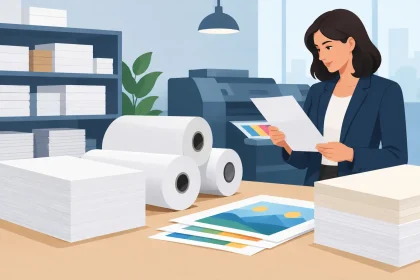
The strongest online print service combines self-service ordering with access to real people when needed. If you have a press-ready PDF, you should be able to upload it and move ahead quickly. If your file has a missing bleed, low-resolution images or the wrong dimensions, practical support can save a costly reprint and a missed deadline.
That balance matters because not every print job is the same. A sole trader ordering a small run of business cards may need a straightforward reorder. An event organiser producing flyers, pull-up banners and directional signage may need a quote, advice on sizes and confidence that every item will arrive together.
Choose print products by the job they need to do
Printed collateral works best when it has a clear purpose. Ordering the cheapest possible item without considering where and how it will be used can undermine the result. Start with the action you want customers to take, then choose the format that supports it.
Business cards for the handover moment
Business cards remain one of the simplest ways to make a professional first impression. They are useful at meetings, inspections, networking events and site visits because they give people a physical reminder of who you are and how to contact you. Premium stock and sharp print detail matter here. A thin, poorly finished card can make a polished brand feel less considered.
Keep the design focused. Your logo, name, role, mobile number, email address and website or key service message are usually enough. If you add a QR code, make sure it is large enough to scan reliably and has enough clear space around it.
Flyers and postcards for offers and awareness
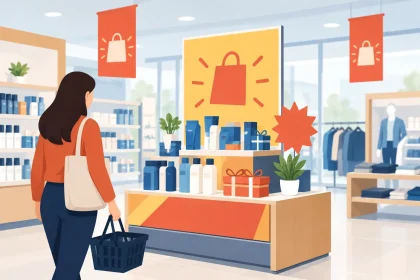
Flyers are built for quick communication. Retail promotions, real estate campaigns, service reminders, venue events and local launches all benefit from a simple message that can be read in seconds. Lead with the offer, event date or customer benefit rather than trying to explain everything your business does.
A flyer also needs to suit its distribution. A handout at a busy event can be smaller and punchier, while a letterbox campaign may need more room for service details, pricing or a booking prompt. Think about what the customer sees first and what you want them to do next.
Banners and large-format print for visibility
Pull-up banners and other large-format products have one job: get noticed from a distance. They are well suited to trade shows, reception areas, pop-up activations, showrooms and venue entrances. The mistake many businesses make is treating a banner like an A4 brochure. Small body copy and crowded layouts disappear once the banner is several metres away.
Use a strong headline, a clear visual, your logo and one direct call to action. Large-format printing rewards restraint. If someone can understand the main message while walking past, the design is doing its job.
Stationery and practical brand touchpoints
Letterheads, envelopes, fridge magnets and drink coasters may seem less urgent than a campaign flyer, yet they often stay in front of customers longer. Branded stationery gives proposals, invoices and formal correspondence a more established feel. Fridge magnets put contact details where customers can find them when they need a local service. Coasters can reinforce a venue identity with every drink served.
These products are not interchangeable. A plumber, accountant, restaurant and event operator will each use them differently. The right choice depends on where customers encounter your brand and how long you want the item to remain useful.
Preparing artwork before you place an order
The fastest route to quality print is a properly prepared PDF. Your artwork should match the product size, include the correct bleed where required and use high-resolution images. Text should sit safely inside the trim area so it is not too close to the edge after cutting.
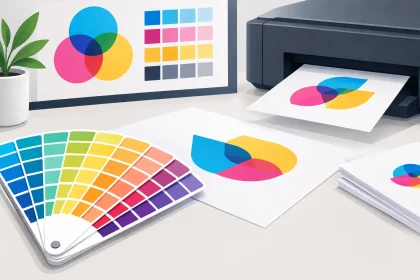
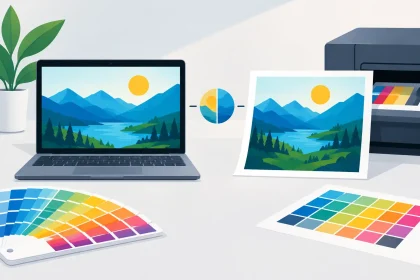
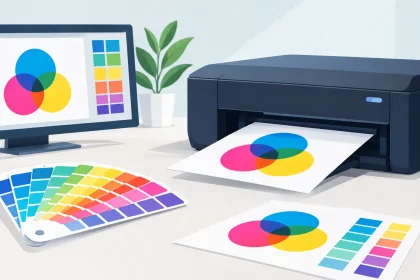
Colour is another common source of surprises. A screen uses light, while print uses ink on physical stock. Colours can appear different depending on the paper, finish and device used to view the artwork. If an exact brand colour is critical, especially across a larger campaign, ask the print team about the best approach before production begins.
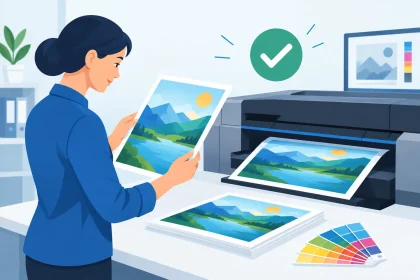
Do not assume a file that looks fine on a laptop is ready for print. Check spelling, phone numbers, email addresses, offer dates and QR codes before uploading. These small details are easy to overlook and expensive to fix after a large quantity has been printed.
If you are not confident with artwork setup, get help early. It is far better to resolve a file issue before checkout than to rush through an order and hope for the best. A responsive print partner should be able to point out practical problems in plain language.
Balancing turnaround, quality and budget
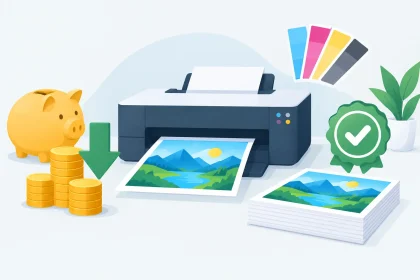
Every business wants fast, high-quality print at a fair price. Usually, you can achieve all three when the order is planned well, but there are still trade-offs. A larger quantity often lowers the cost per item, although it only makes sense if you will use the stock before details change. Ordering too many flyers with a dated promotion is not a saving.
Turnaround also depends on the product, finishing requirements, artwork readiness and delivery location. Standard business cards can be straightforward, while a multi-item event order with banners, coasters and flyers may require more coordination. Build in time for artwork checks, production and courier delivery, particularly around public holidays or major event periods.
Budget decisions should focus on the purpose of the item, not price alone. Spending a little more on durable cards for a high-value professional services team may be worthwhile. For a short weekend promotion, a simpler flyer stock may make more commercial sense. The goal is not to choose the most expensive option. It is to choose print that represents the job properly.
A simple ordering process keeps projects moving
A clear process helps prevent last-minute confusion. Start by selecting a product or requesting a quote if the job has unusual specifications, multiple items or a larger quantity. Once the product, quantity and finish are confirmed, upload your artwork and check it carefully before checkout.
After approval, the printer moves into production and then arranges shipping. For businesses with regular print needs, save approved artwork and make a note of the quantities that work best. Reordering becomes much easier when you are not rebuilding files or guessing what was ordered last time.
For complex jobs, communicate the non-negotiables up front. Say when you need the goods, where they need to be delivered and whether any brand colours, finishing details or packaging requirements are essential. This gives the print team the information needed to recommend a realistic option rather than promising something that does not suit the job.
Make every printed piece earn its place
Print is most effective when it is part of the customer journey, not an afterthought. A business card should lead people to call, email or book. A flyer should promote a specific offer. A banner should make it obvious who you are from across the room. An envelope or letterhead should make formal communication feel credible before it is even opened.
iPrint Media helps Australian businesses bring those practical brand moments together with quality materials, fast turnaround and direct support when files need attention. Whether you are ordering one core product or preparing for a busy event, the best result comes from choosing a format with a clear purpose and allowing enough time to get the details right.
Before your next order, take one extra minute to ask what the customer needs to notice, remember or do. That simple check will help your print work harder long after it leaves the box.