A shopper can make a buying decision in seconds. They notice a special at the front door, see a clear price message near the counter, or pick up a flyer that answers the question they were about to ask. Retail promotion materials give those moments direction. Done well, they make your offer easier to see, easier to understand and harder to forget.
For Australian retailers, cafés, venues and local service businesses with a customer-facing space, print is not simply decoration. It is a practical sales tool. The right mix of posters, counter cards, flyers, banners and takeaway pieces can support a promotion long after a staff member has finished the conversation.
How retail promotion materials earn attention
Promotional print works best when it has one job. A pull-up banner at a trade event may need to introduce your business and explain what you do. A counter flyer may need to promote a limited-time offer. A fridge magnet may need to keep your contact details visible after the customer leaves.
Trying to make one piece do everything usually leads to crowded copy, tiny text and a message that gets missed. Start with the action you want: visit, enquire, book, buy, scan, call or return. Then build the printed piece around that action.
Placement matters just as much as the artwork. A flyer beside the EFTPOS terminal reaches people who are already buying. A poster in a window needs to be readable from the footpath. A drinks coaster has a captive audience, but its message must be brief enough to absorb between conversations. The format should suit the setting, not just the design.
There is also a difference between attracting new customers and helping existing ones spend more. A street-facing sign might promote an introductory deal to bring people inside. Inside the store, a counter display can draw attention to an add-on, a bundle or an upcoming event. Both are worthwhile, but they need different messages.
Choosing retail promotion materials by objective
The most cost-effective printed campaign is rarely the one with the most products. It is the one where each item has a clear role and is printed in the quantity you can genuinely use before the offer changes.
For quick offers and changing messages
Flyers are a flexible choice for sales, new services, menus, seasonal campaigns and letterbox distribution. They are easy to hand out, include with orders or display at the counter. Use a strong headline, a clear offer, relevant dates and one obvious way to respond. If there is a discount, state the conditions clearly rather than relying on fine print that customers may not read.
Posters and format printing are useful when visibility is the priority. They can promote a grand opening, a weekend sale, a class timetable or a venue event. Keep the main message high on the page, use colour contrast and avoid filling every spare centimetre. A passer-by should understand the offer at a glance.
For counters, tables and waiting areas
Countertop print works particularly well in hospitality, salons, clinics, showrooms and service reception areas. Think about what a customer is doing while they wait, pay or sit down. That is an opportunity to promote gift vouchers, loyalty offers, upgrades, new products or bookings.
Drink coasters are especially effective for pubs, cafés and event venues because they sit directly in front of guests. Their absorbent, practical nature helps them stay on the table rather than being treated as a loose handout. A concise promotion, memorable slogan or QR code can work well here, provided it does not compete with the essential information.
Business cards still have a place in retail promotion too. They are not only for networking. A well-designed card can carry a booking reminder, referral offer or return-visit incentive. If your team regularly speaks with customers face to face, giving them something professional to take away makes follow-up easier.
For ongoing local visibility
Fridge magnets are built for messages customers need to keep: booking numbers, takeaway ordering details, emergency trade contacts, appointment information or local service reminders. They are not ideal for a promotion that ends next month. They are better for businesses that want to remain visible over many months.
Pull-up banners are designed for portable visibility. They suit retail launches, shopping-centre activations, market stalls, expos, open inspections and in-store demonstrations. They are also a sensible option when your business trades from different locations. A banner needs a simple hierarchy: logo, main message, key benefit and contact details. If someone needs to stand close to read it, it is doing less than it should.
Make the offer clear before you design
An attractive design cannot rescue a confusing promotion. Before artwork begins, decide what is being offered, who it is for, when it ends and what customers need to do next. This sounds basic, but these details are often added late, which is where errors and clutter creep in.
Use a headline that leads with the customer benefit. “Free consultation with your first booking” is clearer than “Spring campaign now on”. “Lunch and drink special, weekdays” is more useful than a large logo with a vague callout. Your branding should be present and professional, but the offer needs to do the selling.
A short response prompt gives the print a purpose. Depending on the campaign, this could be “Show this flyer in store”, “Book by Friday”, “Ask our team”, “Use code LOCAL10” or “Scan to view the menu”. One clear next step is stronger than several competing instructions.
Choose quality where customers will notice it
Budget matters, particularly when you are ordering for multiple locations or running frequent promotions. But cheap-looking print can weaken the offer it is meant to support. Flimsy flyers, muddy colours and poorly cut cards can leave customers with the impression that the business is equally careless.
That does not mean every job needs the heaviest stock or the largest format. It depends on how long the material will be used and how customers will handle it. A one-day event handout has different requirements from premium appointment cards or coasters used across a busy venue.
Think about the real conditions. Will the piece be carried in a pocket or handbag? Sit outside a shop window? Be handled by hundreds of people? Get splashed at a bar? These practical questions help you select a format and material that works for the campaign, rather than paying for features that add little value.
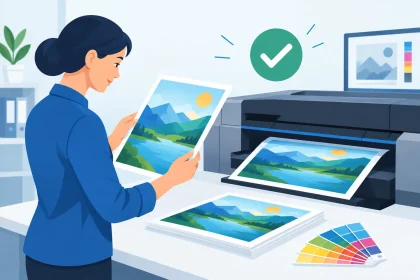
Colour should also be considered carefully. Brand colours need to reproduce consistently across flyers, banners, cards and stationery, especially if customers will see them together. Use clear images with adequate resolution, and leave room around important text so trimming does not affect the finished result.
Keep print production simple and on schedule
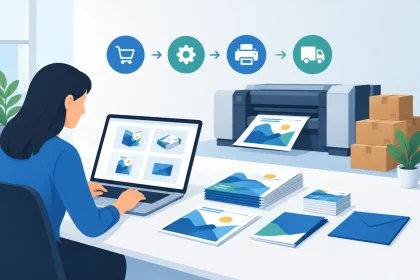
A strong promotion can lose momentum if the materials arrive after the sale starts. Work backwards from your launch date and allow time for artwork checks, printing and courier delivery. For events, consider when your team needs the materials in hand, not simply the event date itself.
If you have press-ready artwork, supplying a properly prepared PDF helps keep the process moving. Check spelling, dates, contact details, QR codes and offer terms before uploading. It is far easier to fix a detail in the file than after a batch has been printed.
If your artwork is not quite ready, ask for help before ordering. Common issues such as low-resolution images, missing bleed, incorrect sizing and hard-to-read text can affect the final result. A print partner that can review the file and explain what needs attention can save you from a costly reprint. iPrint Media supports both customers with ready-to-print PDFs and businesses that need a hand getting artwork right.
Measure what earns another print run
Printed promotions are easier to assess than many businesses realise. Use a unique code, specific landing-page wording, a “bring this flyer” offer or a simple staff question such as “Where did you hear about us?” You do not need perfect data to identify what is working.
Track the basics: how many pieces were distributed, how many offers were redeemed, average sale value and whether the promotion brought in first-time or returning customers. A high response rate is useful, but a smaller campaign that brings better customers may be more valuable in the long run.
Keep notes after each campaign. You may find that counter flyers outperform letterbox drops, that coasters generate more bookings than social posts, or that a banner needs fewer words and a larger offer. Those lessons make the next order sharper and more cost-effective.
The best retail print does not shout for the sake of it. It gives customers a useful reason to act, puts that reason where they will see it and presents your business with the confidence it deserves. Start with one clear offer, choose the format that fits the moment and make every printed piece earn its place.