A prospective customer has just picked up your flyer at a local café, received your quote in an envelope, or taken your business card after a meeting. In that small moment, your printed material is doing the talking. This small business print marketing guide explains how to make sure it says the right thing: professional, clear and worth acting on.
Print works particularly well when it has a job to do. A business card should make following up easy. A flyer should promote one offer. A pull-up banner should help people spot you from across a busy room. When each item has a clear purpose, print becomes a practical part of your sales and marketing activity rather than another expense that sits in a cupboard.
Start With the Result You Want
Before selecting paper stock, size or finish, decide what you need the printed piece to achieve. A restaurant promoting weekday lunch specials has a different need from an accountant building referral relationships or a trade business leaving information after a site visit.
For lead generation, give people a direct next step. That might be a phone number, email address, QR code or a short web address linked to a specific offer. For brand awareness, focus on making your name, logo and core service easy to remember. For events, prioritise visibility and useful information such as a stand number, date or booking details.
Trying to fit every service, every feature and every contact method onto one piece usually weakens the result. Give the reader one main message, then support it with only the information needed to act. If you offer several distinct services, separate materials may work harder than one crowded flyer.
The Small Business Print Marketing Guide to Choosing Products
The best format depends on where customers will see it, how long they will keep it and what you need them to do next. Start with the customer interaction, not the product catalogue.
Business cards for personal follow-up
Business cards remain one of the simplest tools for networking, sales meetings, trade visits and professional introductions. They are compact, inexpensive to keep on hand and much more deliberate than asking someone to search for your details later.
Use both sides well. One side can carry your logo and visual identity, while the other can make your name, role, contact details and key service clear. A card does not need to explain everything you do. Its job is to make the next conversation easier.
Premium stock can make a noticeable difference here. A firm, well-finished card feels considered and is less likely to be thrown away immediately. That said, a clean design and accurate details matter more than adding expensive finishes for their own sake.
Flyers for offers and local reach
Flyers are useful when you have a timely offer, new service, opening, event or seasonal message to share. They work well at counters, in shopping bags, through local letterbox distribution, at community events and as handouts after a conversation.
Keep the headline benefit-led. Instead of leading with your company history, lead with what the customer gets: a limited-time package, a clear saving, a local service area or a practical solution to a problem. Include an expiry date if urgency is genuine, but avoid manufactured pressure that can undermine trust.
The quantity is a trade-off. Ordering a larger run can lower the unit price, but only if the information will stay current. If your prices, staff details or services change often, shorter runs can reduce waste and keep your message accurate.
Pull-up banners for visibility
A pull-up banner earns its place when people need to find you quickly. It is a strong option for expos, conferences, open days, markets, presentations, reception areas and temporary activations.
Design for distance. Someone walking past should understand who you are and what you offer in a few seconds. Use a short headline, a strong image or brand element, and large contact details or a QR code near the lower section. Fine print may be technically readable, but it will not be read from three metres away.
Branded stationery for trust
Letterheads and envelopes can make proposals, invoices, welcome packs and formal correspondence feel more complete. They are particularly useful for professional services, property businesses, finance, legal firms and organisations where credibility is built through detail.
Print stationery is not about making ordinary communication look flashy. It is about making it look consistent. When a customer sees the same colours, logo treatment and contact details across a letter, envelope and business card, they receive a more confident impression of the business behind it.
Coasters and magnets for staying power
Some products are designed to remain visible after the first interaction. Drink coasters can suit hospitality venues, breweries, functions and table-service promotions. Fridge magnets are useful for businesses customers may need at short notice, such as trades, health services, takeaway venues and local providers.
These formats work best when the information is genuinely useful. A magnet with an emergency number, booking reminder or ordering details is more likely to stay on a fridge than one carrying a vague brand message alone.
Build One Campaign, Not Random Pieces
Print is more effective when your materials support each other. For example, a local fitness studio could use a pull-up banner at an open day, flyers with a trial offer, business cards for instructors and fridge magnets carrying class booking details. The campaign has one look, one offer and several ways for people to respond.
Consistency does not mean every item must contain every detail. It means the logo, colours, voice and message should feel connected. Use the same offer wording across your flyer and banner. Make sure the phone number on your card matches the one on your stationery. These small checks prevent confusion and help build recognition over time.
It also helps to plan distribution before you order. Consider who will receive the material, where it will be displayed, who on your team will hand it out and how many copies are realistically needed. A well-designed flyer has limited value if it never reaches the right people.
Make Artwork Easy to Read and Ready to Print
Good print starts with good artwork. Your logo should be sharp, your images high resolution and your text large enough to read in the real world. A file that looks fine on a mobile screen can still print poorly if the images are low quality or the artwork has been supplied at the wrong size.
For press-ready artwork, PDF is generally the practical choice. Check that your document is set to the final print size and that important text, logos and contact details are not sitting too close to the edge. If your design includes a colour background that runs to the edge, it will usually need bleed so the finished product trims cleanly.
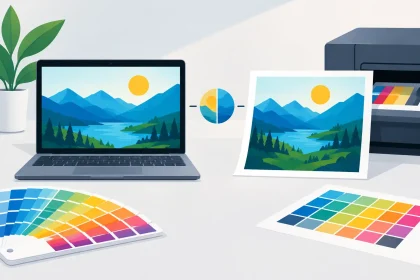
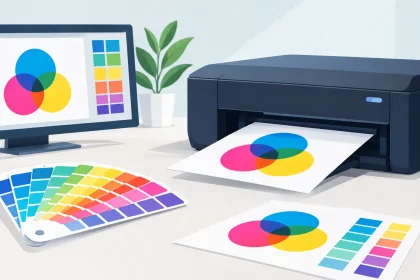
Colour can vary slightly between screens and print because screens create light while ink sits on paper or card. This is normal, but it is another reason to use consistent brand colour values and avoid relying on a screen alone for critical colour decisions.
If you are unsure about your files, ask for help before production begins. Fixing an artwork issue early is faster and more affordable than discovering a problem once the order has been printed. At iPrint Media, customers can upload print-ready PDFs or speak with the print team when artwork needs attention.
Measure What Your Print Is Producing
Print should be accountable, even when its value is not always immediate. Give each campaign a simple way to track responses. Use a unique offer code, a dedicated QR code, a campaign-specific landing page, or ask callers where they heard about you.
Track more than just enquiries. Note how many flyers were distributed, which locations performed best, how many cards led to follow-up meetings and whether a banner attracted people at an event. Over a few campaigns, these details show where to repeat your spend and where to change the message, format or distribution plan.
Some print has a longer role than direct response. A quality business card may lead to work months after a meeting. Branded stationery may help a proposal feel more credible without generating a trackable click. That does not make it ineffective. It means you should assess it against the purpose you set at the start.
Order With Time for the Details
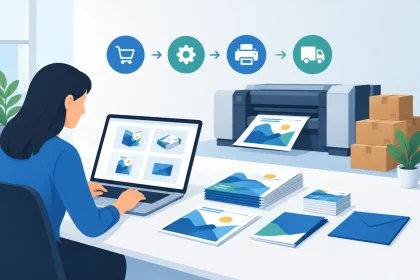
Fast turnaround matters, especially when an event, promotion or deadline is approaching. Still, avoid leaving print until the final moment where possible. Allow time to review the artwork, confirm quantities and delivery details, and make any corrections before production.
For recurring needs, keep approved artwork files organised and note the specifications that worked well. This makes reordering easier and helps maintain consistency when new staff members, venues or campaigns are involved.
The most useful printed marketing is rarely the most complicated. Choose one clear message, match it to the right format and make it easy for customers to respond. A professionally finished piece placed in the right hands can keep working long after the conversation ends.