A flyer has only a few seconds to earn attention. It may be picked up at a counter, handed out on a busy footpath, placed in a letterbox or included with an order. Good flyer printing gives that moment purpose: a clear offer, a professional finish and a simple reason for someone to act.
For Australian businesses, flyers remain one of the most direct ways to put a promotion, event or service in front of local customers. They are affordable, easy to distribute and useful across hospitality, retail, professional services, real estate, trades and community events. The difference between a flyer that works and one that ends up in the rubbish often comes down to a few practical decisions before it goes to print.
Start Flyer Printing With One Clear Job
Before choosing a size or paper stock, decide what the flyer needs to achieve. A flyer trying to announce a new menu, recruit staff, promote a weekend sale and explain every service your business offers will usually feel crowded. Give each campaign one main job.
For a café, that may be filling quieter weekday mornings with a coffee and pastry offer. For a local accountant, it may be encouraging small business owners to book an end-of-financial-year consultation. An event organiser may simply need people to scan a QR code and secure tickets.
Place the strongest message where it can be understood at a glance. A short headline, a relevant image and a visible call to action are often more effective than a page of detail. Supporting information can sit below, but the reader should not need to search for the point.
The call to action should match the campaign. “Visit us this Saturday”, “Book your free consultation”, “Show this flyer for 10% off” and “Scan to register” are all specific. “Contact us for more information” can work for a complex service, but it is less immediate for a time-sensitive offer.
Choose the Flyer Size for How It Will Be Used
Size affects cost, visibility and distribution. There is no single best option. The right format depends on how much information is needed and where the flyer will be seen.
A5 flyers are a popular choice for promotions because they are compact enough for handouts, counter displays and letterbox drops, while still providing room for an image, offer and contact details. A6 suits short, high-impact messages such as discount vouchers, venue promotions or event reminders. A4 gives you more space for detailed service information, menus, price lists or property and education campaigns.
Think about the practical journey as well. If customers are likely to put the flyer in a handbag, wallet or fridge door, a smaller format can be easier to keep. If it will be displayed in a shop window or shared at a trade event, a larger size may earn more attention from a distance.
Double-sided printing is worth considering when the back has a clear role. Use it for a map, menu, terms and conditions, service list or a second offer. If the back is being filled simply because space is available, it may be better to keep the design focused on one side and invest the budget in better stock or a larger quantity.
Paper Stock Changes the First Impression
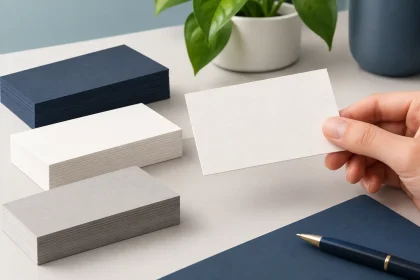
Customers notice the feel of a flyer before they read every word. Lightweight stock can make sense for high-volume letterbox distribution where budget and postage matter. For a premium retail, hospitality or professional service offer, a heavier stock often creates a more credible first impression.
A silk or gloss finish can help photographs, food imagery and bold colours stand out. It works well for menus, entertainment venues, retail launches and special offers where visual impact matters. Uncoated stock has a more natural, tactile feel and is easier to write on, making it useful for appointment cards, forms, vouchers and information sheets.
There is a trade-off. Glossy paper may look sharp, but can be harder to read under certain lighting if the design has large blocks of small text. Uncoated paper feels premium in a different way, but colours may appear less vivid than on coated stock. The best choice should support the message, not just follow a trend.
If you are unsure, ask for practical advice before ordering. At iPrint Media, customers can supply press-ready PDF artwork or speak with the print team when they need help checking files, choosing a format or working to a deadline.
Design for the Real World, Not Just the Screen
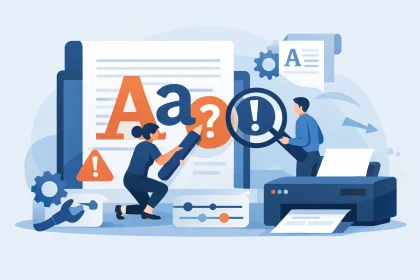
Artwork that looks good on a monitor does not always translate neatly to print. Screens are backlit and can make colours appear brighter than they will on paper. Fine text, pale type and low-resolution images can also become harder to read once printed.
Use high-resolution images and keep important content away from the edge of the page. A small safety margin protects text, logos and contact details from being trimmed too close. If a background colour or image runs to the edge, the artwork needs bleed so the finished flyer does not show thin white borders.
Readability is especially important for flyers. Choose a clear typeface, maintain enough contrast between text and background, and resist making essential details too small. Your phone number, website address, QR code, event date or offer expiry should be easy to find without a magnifying glass.
QR codes are useful when they lead somewhere valuable. Send people to a booking page, event registration, menu, quote form or limited-time offer. Test the code from a printed proof or at least at its intended size before placing the order. A code that does not scan quickly creates friction at the exact point when interest is highest.
Build an Offer People Can Act On
A beautifully printed flyer cannot rescue an unclear offer. Give people a reason to respond now, whether that is a deadline, limited availability, an introductory price or a genuinely useful bonus.
The offer does not always need to be a discount. A legal firm may promote a fixed-price first consultation. A gym could offer a free trial session. A venue may advertise a themed night, a new function package or a local live music event. The key is making the benefit concrete and relevant to the audience receiving the flyer.
Be careful with conditions. If an offer has exclusions, include the important details in plain language. Tiny, dense terms can make a promotion feel less trustworthy. If more information is required, provide a QR code or short contact path rather than turning the flyer into a contract.
For local campaigns, consider distribution as part of the offer. A lunch special handed out near offices should be timed for the morning or just before lunch. A family event flyer belongs where families already spend time, such as community noticeboards, local shops and partner venues. A business-to-business service flyer may perform better when included in a proposal pack, handed out at networking events or displayed at a complementary business.
Order Enough, But Keep Room to Learn
Print quantity should reflect the campaign, not just the lowest unit price. Ordering more flyers usually reduces the cost per piece, which is useful for ongoing promotions or broad distribution. But a large run is not always the sensible choice if you are testing a new message, price point or event concept.
For a first campaign, a smaller run can reveal what customers respond to. Track redemptions with a unique code, ask callers where they heard about the offer, or use a dedicated QR code. That information helps you improve the next run instead of repeating an expensive guess.
Allow enough time for artwork checks, production and delivery, particularly when the flyer supports a fixed-date event. Last-minute jobs are possible in some circumstances, but planning ahead gives you more control over paper choices, quantities and distribution. It also allows time to correct a missed date, incorrect phone number or awkward layout before hundreds of copies are produced.
A flyer earns its place in your marketing when it is clear, well made and delivered to the right people at the right time. Start with one useful message, choose a format that suits the campaign, and make it easy for the reader to take the next step. That is how a simple printed piece becomes a practical driver of enquiries, visits and bookings.