A busy event floor gives people seconds to decide whether to stop, pick something up or walk straight past. That is why event collateral planning should start well before artwork is sent to print. The right mix of printed materials gives your team something useful to hand over, makes your space easier to find and helps people remember your business once the event is over.
For Australian businesses, the goal is not to print every possible item. It is to choose practical, brand-representative collateral that suits the event, your budget and what you want attendees to do next.
Start Event Collateral Planning With One Clear Goal
A trade show stand, local networking breakfast, conference sponsorship and venue launch all need different print. Before choosing quantities or paper stock, decide what success looks like. You might want qualified leads, more bookings, stronger local awareness, a product launch conversation or a professional leave-behind for existing clients.
That goal should shape every item on the table. If your sales team needs to start conversations, a pull-up banner and a simple flyer with one clear offer may do the job. If attendees are likely to contact you after the event, premium business cards and a concise capability flyer give them the details they need. For hospitality venues, branded drink coasters can keep your name in front of guests while doing a useful job.
Trying to say everything at once usually weakens the message. Choose one main call to action, such as requesting a quote, booking a consultation, visiting your venue or scanning a QR code for an event offer. Your printed pieces can support that action without competing with one another.
Choose Collateral People Will Actually Keep
Print has to earn its place at an event. A flyer works well when it gives attendees a reason to take it away: a limited-time offer, useful service information, a menu, a product range or a clear next step. A generic brochure with crowded copy can be expensive to produce and easy to leave behind on a table.
Business cards remain one of the most effective event essentials because they are compact, personal and expected. Use sharp, easy-to-read contact details, keep the layout uncluttered and make sure the card reflects the standard of your business. A premium stock can make a meaningful difference when you are meeting clients, suppliers or referral partners face to face.
Pull-up banners are valuable because they work while your team is busy talking. Place the key message high enough to be read from a distance. Your business name, a short benefit statement and one strong image or offer are usually enough. Small text may look fine on a screen but disappears in a crowded exhibition hall.
Consider the practical setting too. Coasters suit bars, cafes, functions and hospitality activations. Fridge magnets are useful for trades, local services and businesses people may need later. Letterheads and envelopes can support a more formal event follow-up, particularly for professional services firms sending proposals or welcome packs.
The best choice depends on how attendees will engage with you. A high-volume community event may call for affordable flyers and a visible banner. A smaller business forum may justify fewer, higher-quality materials that support more valuable conversations.
Plan Quantities Around Foot Traffic, Not Guesswork
Over-ordering ties up budget and storage space. Under-ordering can leave a stand looking bare halfway through a key event. Estimate quantities using the expected attendance, the number of event days and the percentage of people likely to pass your space.
You do not need to give every person a flyer. At a large expo, perhaps only a portion of attendees will be relevant prospects. At a targeted industry conference, the take-up rate may be much higher. Consider whether staff will hand materials out selectively or whether people can pick them up themselves. Handing out collateral after a genuine conversation often reduces waste and improves lead quality.
Business cards are different. Bring enough for every team member to exchange cards freely, with extras for organisers, suppliers and unexpected contacts. If you are using a printed offer or voucher, include a little contingency for staff use, damaged copies and strong demand.
For recurring events, track what was used. A quick note after pack-down can improve the next order: how many flyers remained, whether the banner message attracted attention and which item started the most conversations. This simple record makes future planning more accurate.
Build a Consistent Set, Not a Random Collection
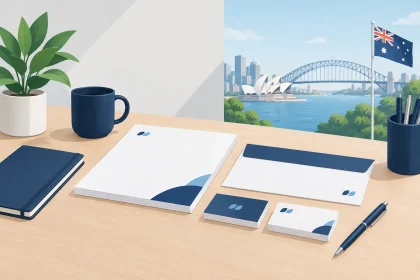
Your banner, flyer, business card and promotional item should look like they belong to the same business. Use the same logo version, colours, typefaces and tone of voice. Consistency is not about making every piece identical. It is about helping people recognise your business when they see it again.
Keep key details consistent as well. If your flyer uses a QR code leading to an event offer, make sure the same offer is mentioned by staff and on signage. If your banner promises fast quotes, the contact details and web address on your cards must be current. Small mismatches can make a polished display feel less reliable.
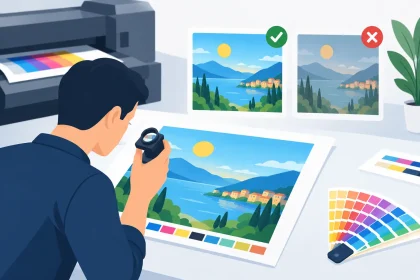
Use images at the right quality for print. A photo that appears clear on a mobile screen may print soft when enlarged for a banner. Logos copied from websites are often too low-resolution for professional print. Starting with the correct artwork file avoids rushed changes, unexpected delays and disappointing results.
Give Artwork and Production Enough Time
Events have fixed dates, which means print deadlines are real deadlines. Work backwards from the day you need the materials in hand, not from the event opening time. Allow time for design approval, artwork checks, printing, finishing and courier delivery, especially when materials are travelling to a regional location or a venue with specific delivery rules.
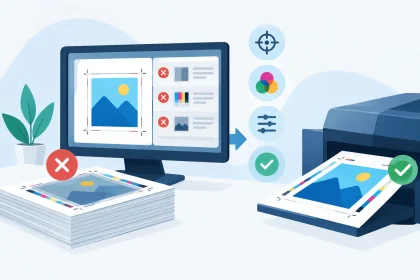
If you have press-ready artwork, export a high-resolution PDF with the correct size, bleed and safe margins. If those terms are unfamiliar, get help before placing the order. Fixing a file early is far easier than discovering that important text sits too close to the edge or that a logo will print poorly.
It also pays to check the venue’s requirements. Some exhibition organisers have strict rules on banner sizes, stand construction, delivery windows and where packages can be stored. A pull-up banner that is perfect for a shopfront may not suit a compact shell-scheme stand. Confirm the space you have booked before committing to large-format print.
At iPrint Media, customers can upload print-ready PDFs or ask the print team for guidance when artwork needs attention. That support is particularly useful when a deadline is close and the collateral needs to arrive looking professional.
Make the Printed Piece Easy to Act On
A strong event handout answers three questions quickly: who are you, why should the reader care and what should they do next? Avoid filling every available space with text. A clear headline, a few useful points, contact details and one direct action are often more effective than a page of detail.
QR codes can be useful, but only when they lead somewhere worthwhile. Send people to a simple event page, a booking form, a menu, a downloadable guide or a specific offer. Test the code on different mobiles before printing, and include a short written web address or contact option for people who prefer not to scan.
Think about the moment after the event too. A person may collect your flyer while rushing between sessions, then look at it days later. Make it easy for them to understand the value without needing to remember the conversation. A well-designed printed piece keeps working after your stand has been packed away.
Prepare for Pack-Down Before You Arrive
Collateral can be damaged quickly if it is carried loose in the car, stacked near food and drinks, or packed without protection. Keep flyers flat in sturdy cartons, transport banners in their carry cases and separate clean stock from samples people have handled. Bring only what needs to be displayed, then restock during the day so the table stays tidy.
Assign one person to check collateral levels and collect any remaining pieces at pack-down. Good stock can often be used at the next event, in customer packs or at your reception area, provided the offer and contact details are still current.
The best event materials do more than decorate a stand. They give your team confidence, make your message visible and put a useful reminder of your business into the right person’s hands. Plan early, keep the message focused and choose print that gives people a reason to take your brand with them.